

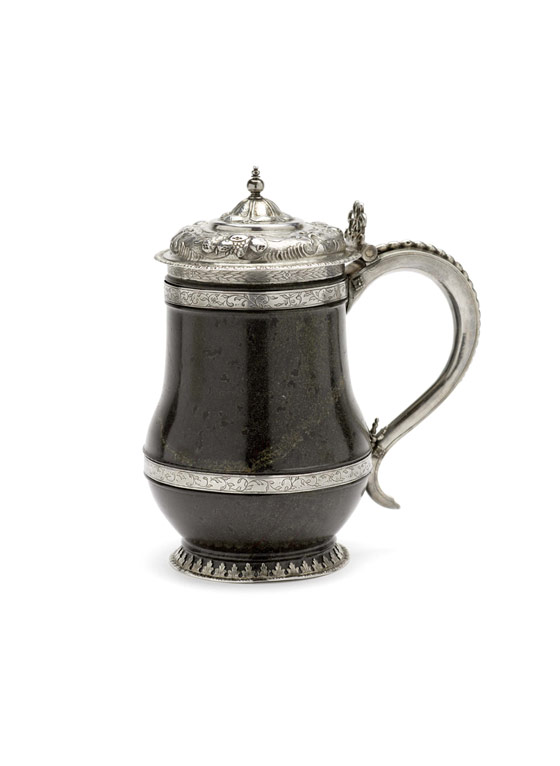
Serpentine pyriform tankard
Saxon, probably Dresden, ca 1630
Mount: probably Dutch, ca 1630
Dark green and reddish serpentinite; mount: silver, cast, embossed, engraved, chased
Old collection label on the underside: ‘47632’
Height ca 17 cm, diameter at the foot ca 8 cm
This Renaissance serpentine tankard is a rare showy vessel that is stunning because of the dark green colour of the stone and the consummate craftsmanship displayed in the carved stone and the silver mount. Serpentine vessels of identical form are in the Green Vault in Dresden and the Landesmuseum in Kassel. Made between 1575 and 1620, they both sport fire-gilt silver mounts and were verifiably spectacular exibits in the Kunstkammer owned by the rulers of the respective principalities. In the early modern age serpentine vessels were particularly prized for several reasons. First, serpentine was esteemed for its aesthetic qualities: the stone fascinated viewers with its colouration that ranged from light green to dark red and the black-flecked surface when polished that gave the mineral its name because of its resemblance to snakeskin. However, serpentine was also coveted for the apotropaic and therapeutic properties imputed to it: one of the properties ascribed to serpentine was indicating toxicity, which is why it was mainly worked into drinking vessels in the sixteenth and seventeenth centuries. Working serpentine had been a Saxon speciality since the mid-sixteenth century at the latest, and the craft was concentrated in Zöblitz, a town in the Ore Mountains. Thanks to the serpentine deposits in the region, stone-cutting flourished, at first on commission from the Saxon court, and was later promoted by demand that went beyond the borders of Saxony. Although stone vessels were turned in Saxony, they were often given precious mounts somewhere else. The present magnificent tankard, for instance, was presumably mounted in the United Provinces, the Dutch Republic, rather than Saxony. Dutch origin is suggested by the finely wrought silver mount of sterling quality as well as the strapwork imitating cartilage that adorns the tankard’s lid. The Dutch goldsmith Paulus van Vianen (1570-1613) had introduced at the beginning of the 17th century the so-called Auricular style, which became particularly fashionable in the 1630’s and 1640’s in the Netherlands and obviously determined the shape of the serpentin tnakard’s silver mount.