
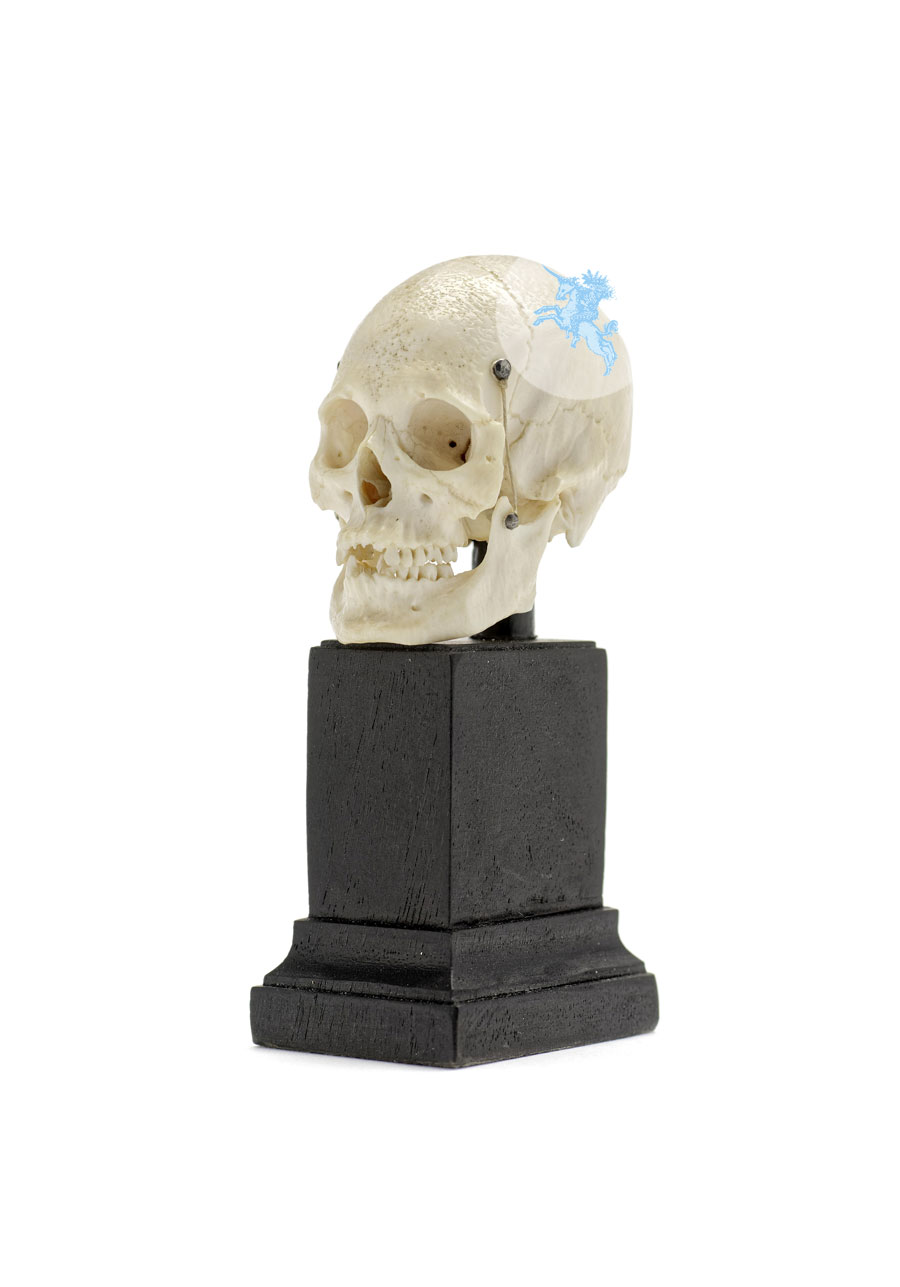
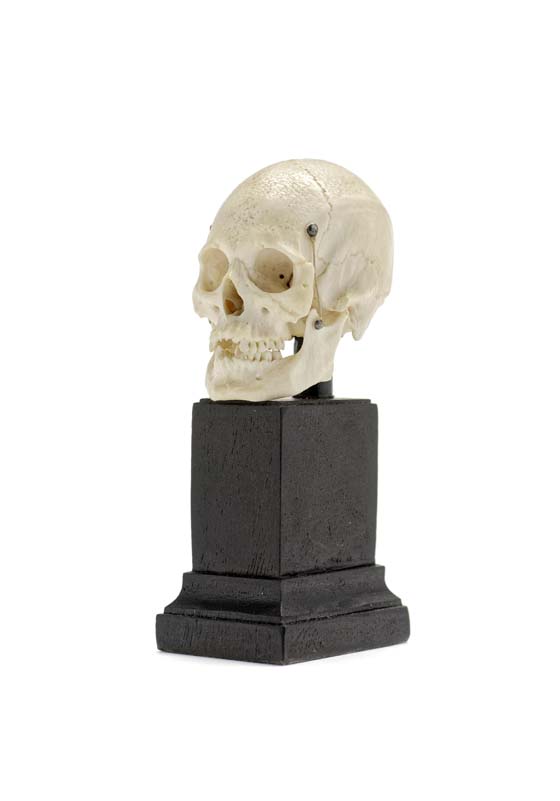
Anatomy model of a skull with moveable jaw
German, 18th century
Ivory, modern base
Height 4 cm
SOLD - Please contact us for similar artwork!
The ivory skull is carved with astonishing precision and stands out through the truly naturalistic quality of its carving: the artist took into account all anatomical specificities of the skull, representing the nasal cavity, the teeth and also the articulated jaw in a very convincing manner. This emphasis on a realistic and detailed representation indicates that the skull model was an object of medicinal interest. At the same, this precious ivory sculpture was also reminiscent of the imminent and inevitable death that threatens every individual.
Indeed, as memento mori (“remember your mortality”), the ivory skull demonstrates to the beholder how deeply the preoccupation with death and thoughts of vanitas are rooted in the culture of early modern times. Ars moriandi was the term give to the intensive confrontation with transiency, which had the purpose of motivating a God-fearing life. Hence the Christian “practised” the “art of dying” every day when reading edifying writings and also when contemplating graphic and sculptural representations of Death. Since the sixteenth century these have included such motifs as the danse macabre or the dance of death, Wendeköpfe (double-faced heads) and also skulls as appropriate objects for meditation on life and death. Accordingly they found access as artful, small-scale sculptural works in Kunst- and Wunderkammer. Duke Karl I of Braunschweig-Wolfenbüttel, for instance, kept in his cabinet of natural curiosities several, very similar ivory skulls.